
English


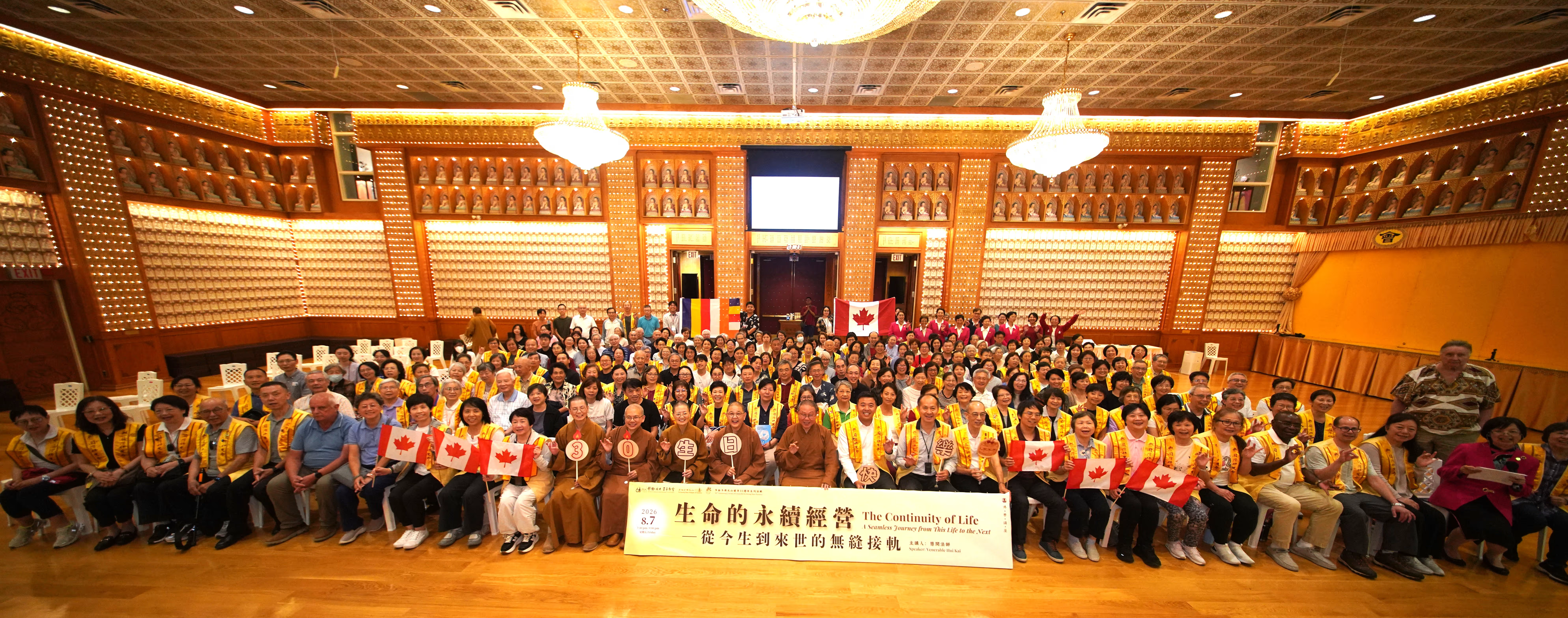
Fo Guang Shan Temple of Toronto welcomed nearly 300 attendees from Canada and the United States on August 7 for a Dharma talk by Venerable Hui Kai, Deputy Abbot of Fo Guang Shan. Titled “The Continuity of Life: A Seamless Journey from This Life to the Next,” the talk explored how Buddhist wisdom can help people understand life and death and prepare mindfully for the journey from this life to the next.
Returning to Toronto after seven years, Venerable Hui Kai was welcomed by Abbess Venerable Chueh Fan, who expressed gratitude for his visit during his 40-day North American teaching tour.
Citing Fo Guang Shan founder Venerable Master Hsing Yun’s teaching that “life does not die; life is eternal,” Venerable Hui Kai challenged common fears and misconceptions about death. Just as the cells of the body are continually renewed, he explained, life is part of an ongoing cycle. “Death is the beginning of the next life.”
The essential question, he said, is how to face this transition with freedom and ease. For Buddhist practitioners, preparing for rebirth in the Pure Land is not something to leave until the final moments of life. The ideal preparation begins now, while one still has the clarity, energy, and strength to cultivate a connection with the Buddha.
With humour and everyday analogies, Venerable Hui Kai encouraged participants to “connect” with the Buddhas and bodhisattvas early—and stay connected every day. Like a phone that needs power and Wi-Fi to remain online, practitioners need consistent spiritual practice. Mindfulness of the Buddha, reciting the Buddha’s name, and following the Buddha’s teachings can build spiritual strength for life’s final transition.
Drawing on his experience accompanying his parents at the end of their lives, he encouraged families to recall joyful memories with loved ones, helping them approach death with peace and gratitude. He also emphasized the Three Acts of Goodness—doing good deeds, speaking good words, and thinking good thoughts—to cultivate the conditions for a wholesome future life.
“Education about life and death is not education about dying—it is education about living,” Venerable Hui Kai emphasized. His message was practical: live well, cultivate wholesome connections, and practice diligently now, so the journey from this life to the next can be met with clarity, confidence, and peace.