
English


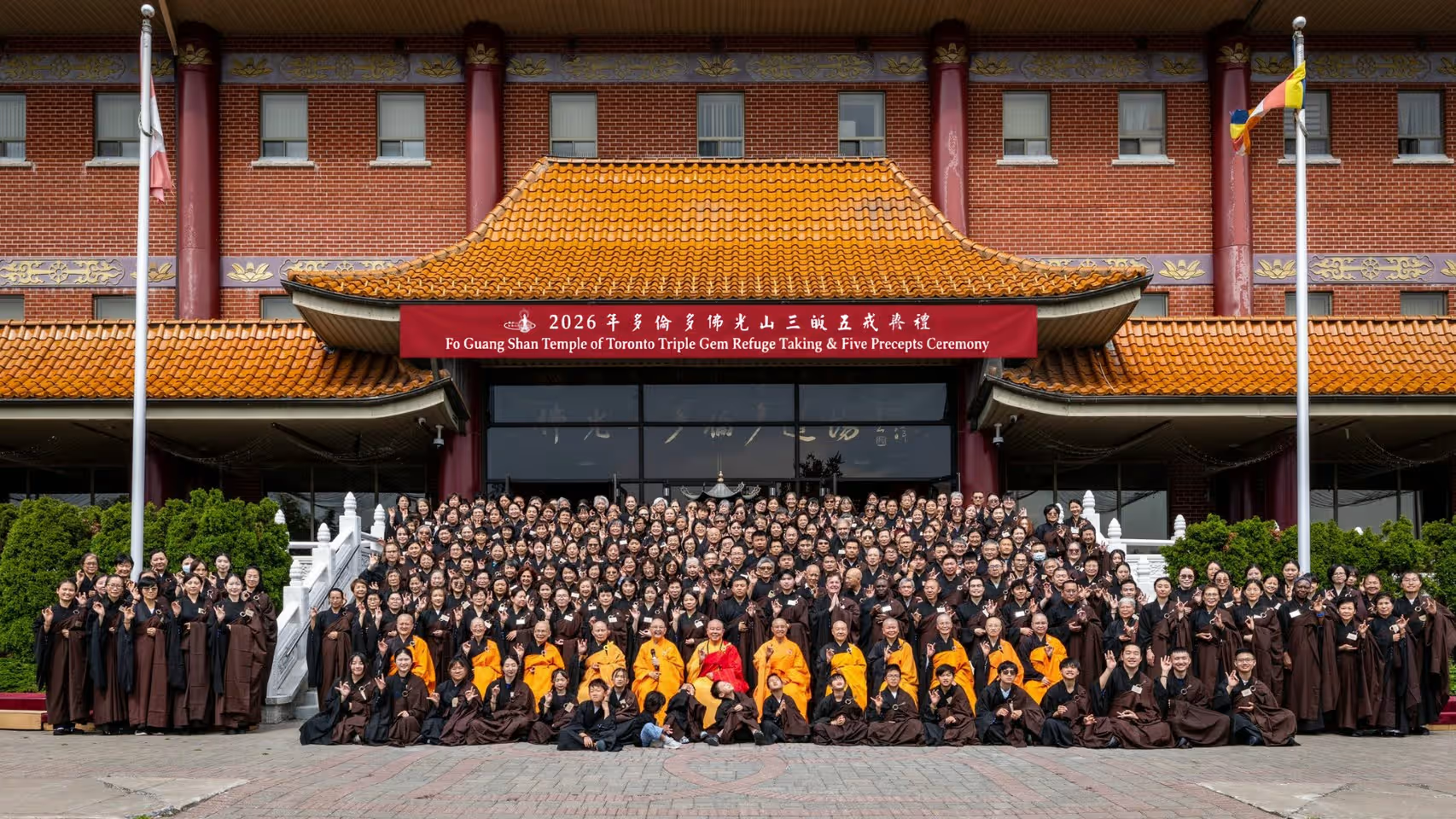
Fo Guang Shan Temple of Toronto welcomed nearly 300 people to its Triple Gem Refuge and Five Precepts Ceremony on Aug. 8, marking the temple’s 30th anniversary and Fo Guang Shan’s 60th anniversary.
Presided over by Venerable Hui Kai, Deputy Abbot of Fo Guang Shan, the ceremony brought together participants from across Canada and the United States, including Montreal, Chicago and Detroit. Those receiving the precepts ranged in age from 3 to 93, while the youngest to take refuge was a three-month-old infant.
Venerable Yung Han, Abbess of Fo Guang Shan Chicago, led the ceremony rehearsal and encouraged participants to remember their original aspiration and come “for the Dharma,” making Buddhist teachings a foundation for daily life.
Following the ceremony, Venerable Hui Kai explained that the Five Precepts should not be viewed as restrictions, but as safeguards. He compared them to a “guiding light” and a “firewall” that help practitioners avoid harmful actions, protect body and mind, and cultivate right understanding.
Abbess Venerable Chueh Fan noted that amid today’s constant flow of information, the precepts can provide clarity and direction while helping practitioners remain mindful of their original aspiration.
For many, the ceremony marked a deeply personal milestone. Maria An of the International Buddhist Progress Society of Montreal drove six hours after work to attend after three years of Buddhist study. “I finally felt I was ready to receive the precepts,” she said.
Four Fo Guang University interns also took refuge and received the precepts. Social Work student Wesley Wang said the writings of Venerable Master Hsing Yun helped him find answers to questions about life, inspiring him to become a Buddhist. Iris Chien said the experience encouraged her to reflect more carefully before every action and word.
Monika Oroszlan, who has attended the temple’s Lotus Mornings practice group for the past year, said she was deeply moved by the solemn ceremony and by seeing so many people practise together. Receiving her Dharma name, “Ren Ke,” further strengthened her commitment to learning and practising the Dharma.
Parents, children and couples also participated together, reflecting a shared commitment to bringing Buddhist values into everyday life and family relationships.