
English


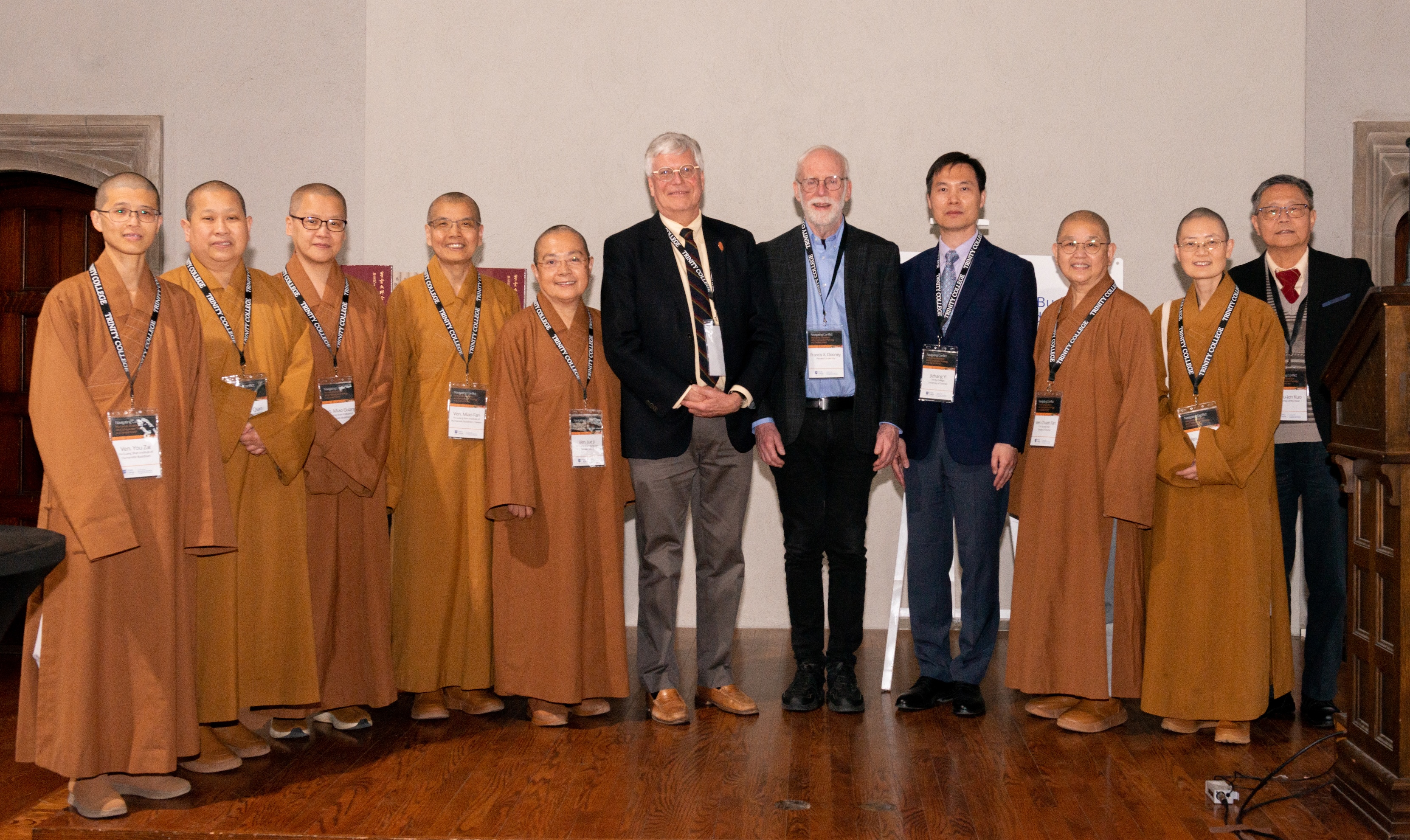
Following the establishment of the Institute for Humanistic Buddhist Thought and Practice at Trinity College, University of Toronto, the institute held its inaugural International Inaugural Conference from May 6 to 8. Scholars and religious leaders from Canada, the United States, Taiwan, China, Bangladesh, and the Philippines gathered for interdisciplinary dialogue on Humanistic Buddhism and contemporary society.
Among the presenters were four Fo Guang Shan monastics — Venerable Miao Guang, Venerable Jue Ji, Venerable Jue Qian, and Venerable Zhi Guan — whose presentations reflected the growing academic recognition of Fo Guang Shan’s monastic education and Humanistic Buddhism scholarship.
The conference featured two keynote lectures, two plenary forums, and seven panel sessions, with 17 papers focusing on Fo Guang Shan, Humanistic Buddhism, and the teachings of Fo Guang Shan Founder, Venerable Master Hsing Yun. Venerable Miao Fan noted that the monastics explored Humanistic Buddhism through culture, education, technology, and spiritual care, demonstrating how Buddhist wisdom and compassion can respond to contemporary social needs.
Venerable Chueh Fan, who played a key role in supporting the establishment of the institute, remarked that the conference marked an important step in bringing Fo Guang Shan’s educational achievements and lived practice into the international academic sphere. She emphasized that Humanistic Buddhism integrates both theory and practice, allowing years of Fo Guang Shan’s community-based cultivation and service to be meaningfully articulated within a Western academic context.
Venerable Miao Guang discussed the English edition of the Fo Guang Dictionary of Buddhism and FoGuang AI, explaining that Buddhist translation in the AI era involves not only language conversion, but also the reorganization and global transmission of Buddhist knowledge. Quoting Lewis R. Lancaster, she noted that “AI is not meant to replace human translators, but to allow humans to focus on wisdom, interpretation, and responsibility.”
Venerable Zhi Guan and Stephanie Hong, leader of the Buddha’s Light Spiritual Care Group, presented research on post-pandemic spiritual care initiatives integrating psychology and sociology. Their findings showed positive correlations between volunteer participation, empathy, and compassion, while highlighting how collective care can strengthen community resilience and social stability.
Presenting on “Establishing Models for Humanistic Buddhist Practice in the West,” Venerable Jue Ji shared how English-language cultivation programs have been adapted for Western audiences through culturally accessible practices, music, and community engagement, while remaining rooted in Venerable Master Hsing Yun’s vision of internationalizing Humanistic Buddhism.
Meanwhile, Venerable Jue Qian shared how the Humanistic Buddhism Reading Association fosters reading groups that address modern life challenges through reading, dialogue, deep listening, and self-reflection. She emphasized that Buddhist scholarship should not remain confined to books, but should serve as a practical guide for personal growth, spiritual well-being, and the betterment of society.


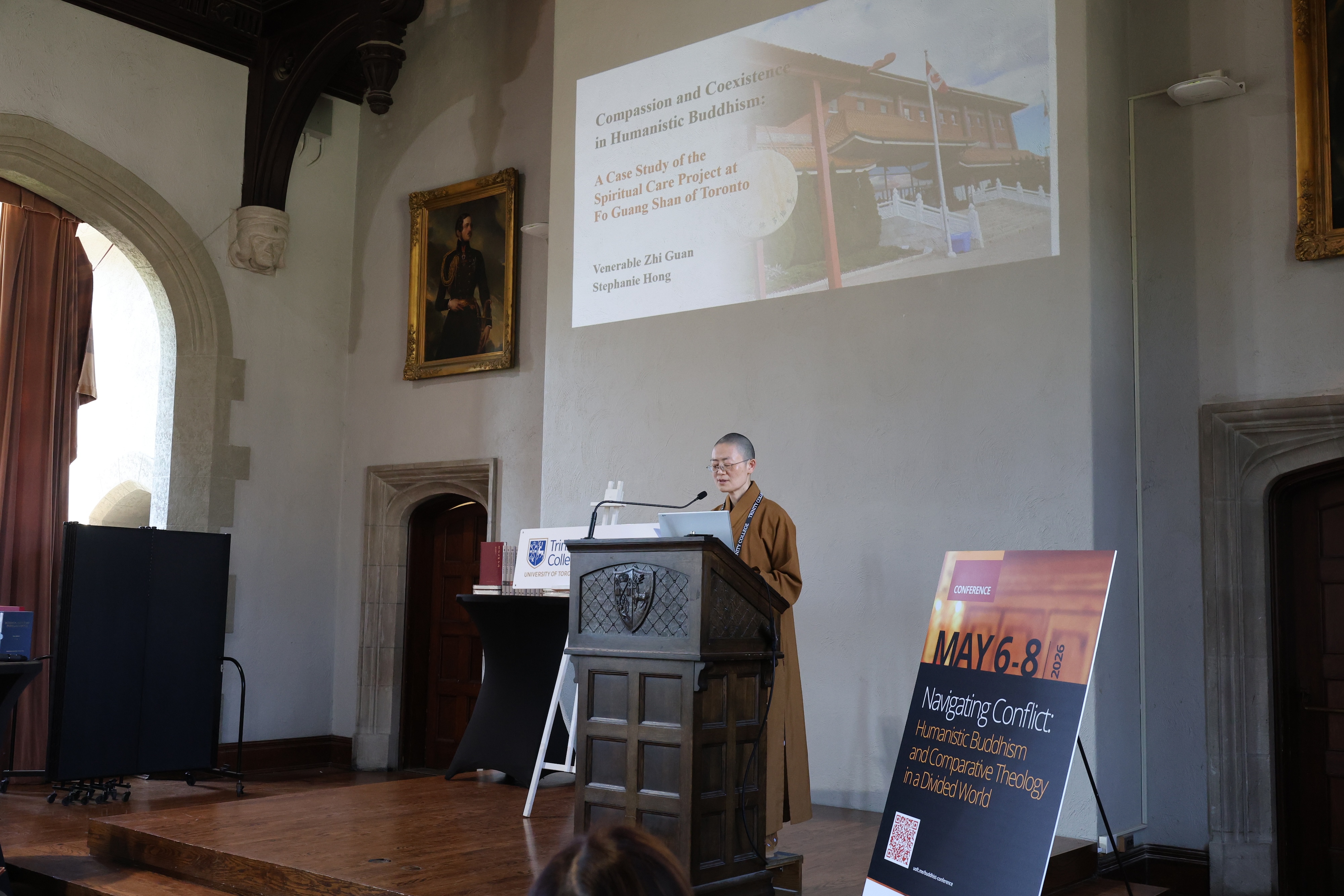

%E8%88%87Stephanie%20Hong(%E5%8F%B31)%E5%88%86%E4%BA%AB%E5%BE%8C%E7%96%AB%E6%83%85%E6%99%82%E4%BB%A3%EF%BC%8C%E5%A4%9A%E5%80%AB%E5%A4%9A%E4%BD%9B%E5%85%89%E4%BA%BA%E5%A6%82%E4%BD%95%E7%B5%90%E5%90%88%E5%BF%83%E7%90%86%E5%AD%B8%E8%88%87%E7%A4%BE%E6%9C%83%E5%AD%B8%EF%BC%8C%E6%8E%A8%E5%8B%95%E5%BF%83%E9%9D%88%E6%94%AF%E6%8C%81%E8%88%87%E7%B2%BE%E7%A5%9E%E7%85%A7%E8%AD%B7%E3%80%82%E8%A6%BA%E5%87%A1%E6%B3%95%E5%B8%AB(%E5%B7%A61)%E3%80%81%E5%A6%99%E5%85%89%E6%B3%95%E5%B8%AB(%E5%B7%A62)%E6%AD%A1%E5%96%9C%E8%88%87%E5%85%A9%E4%BD%8D%E7%99%BC%E8%A1%A8%E8%80%85%E5%90%88%E5%BD%B1%E3%80%82.jpg)