English


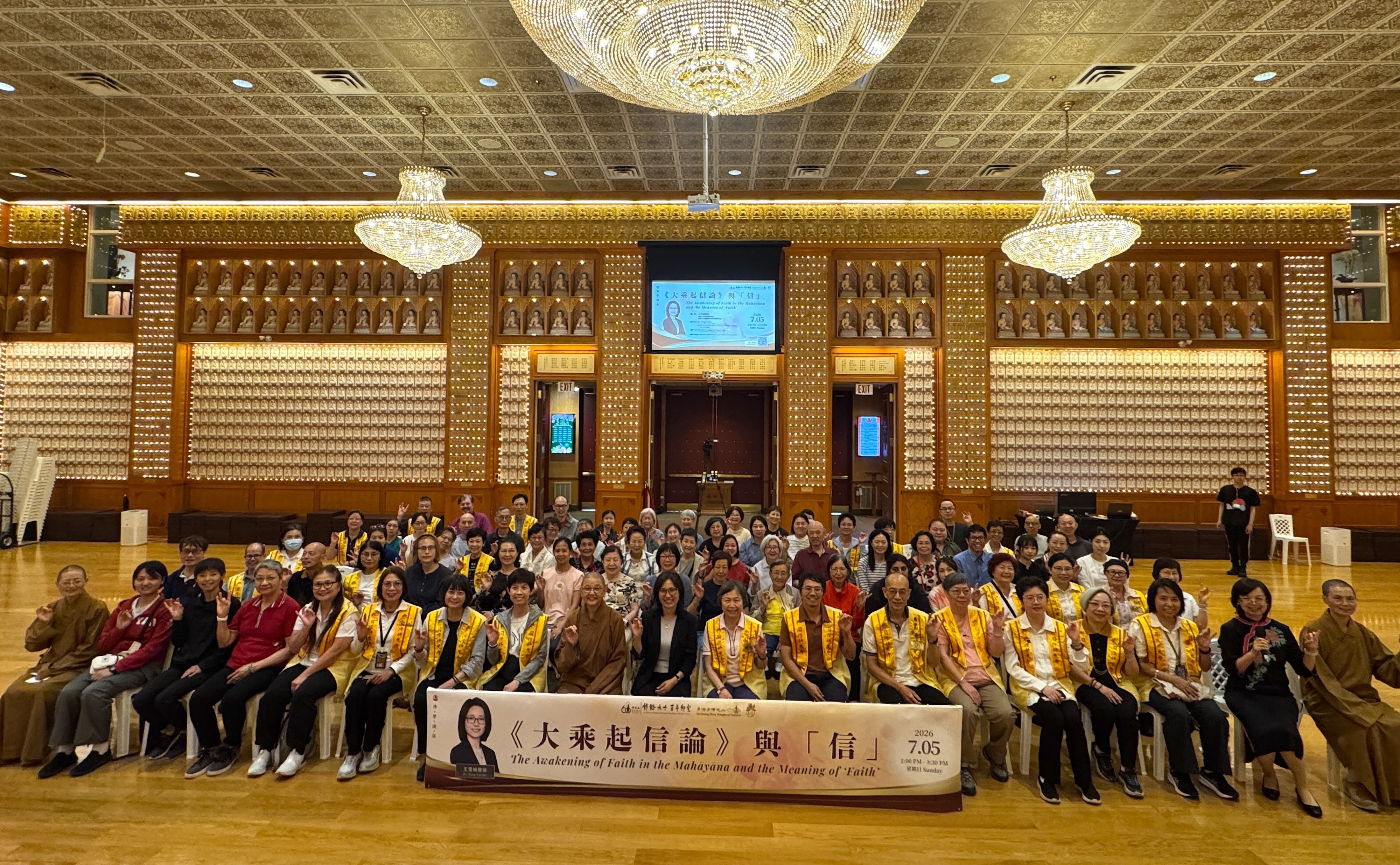
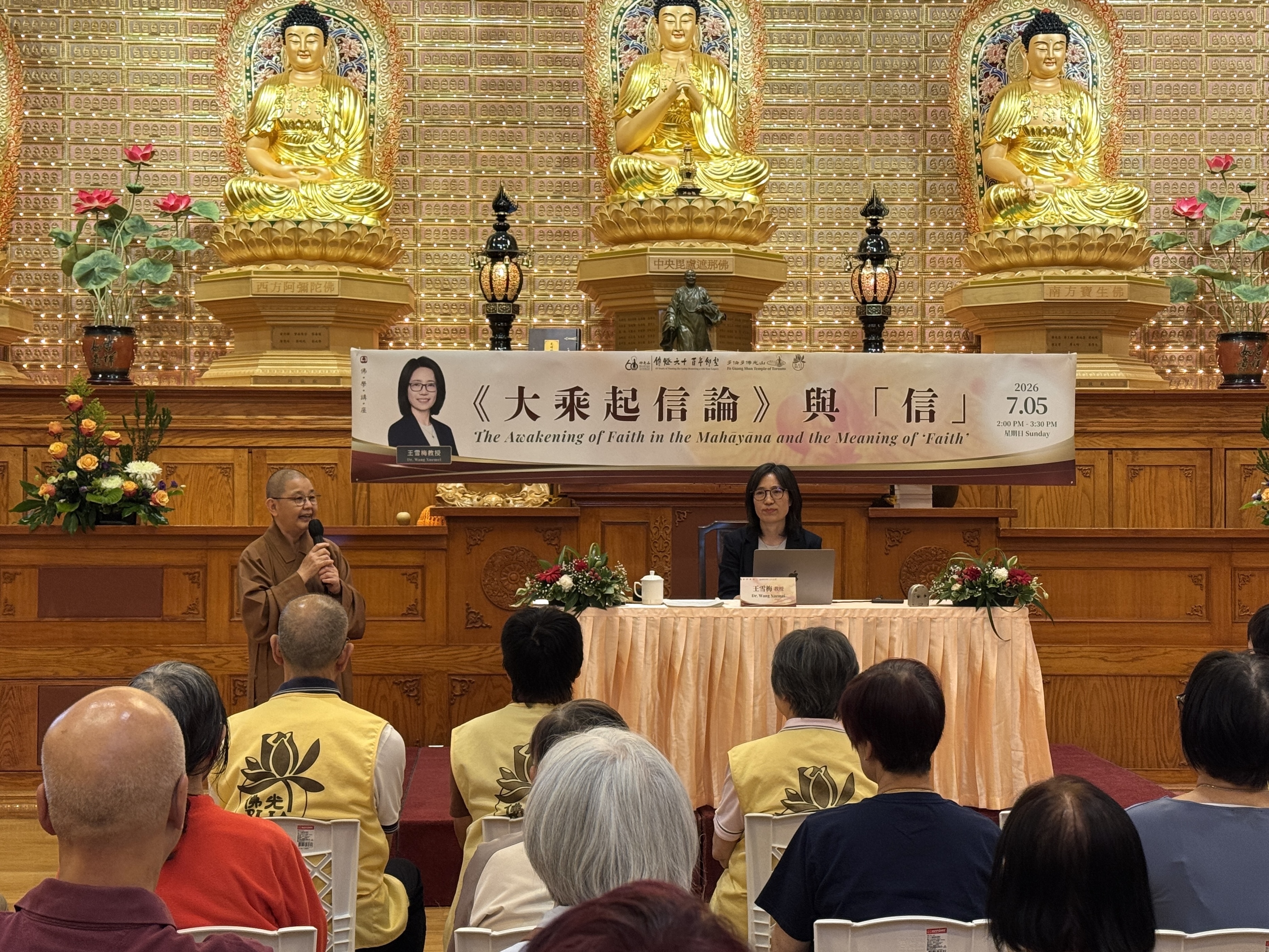
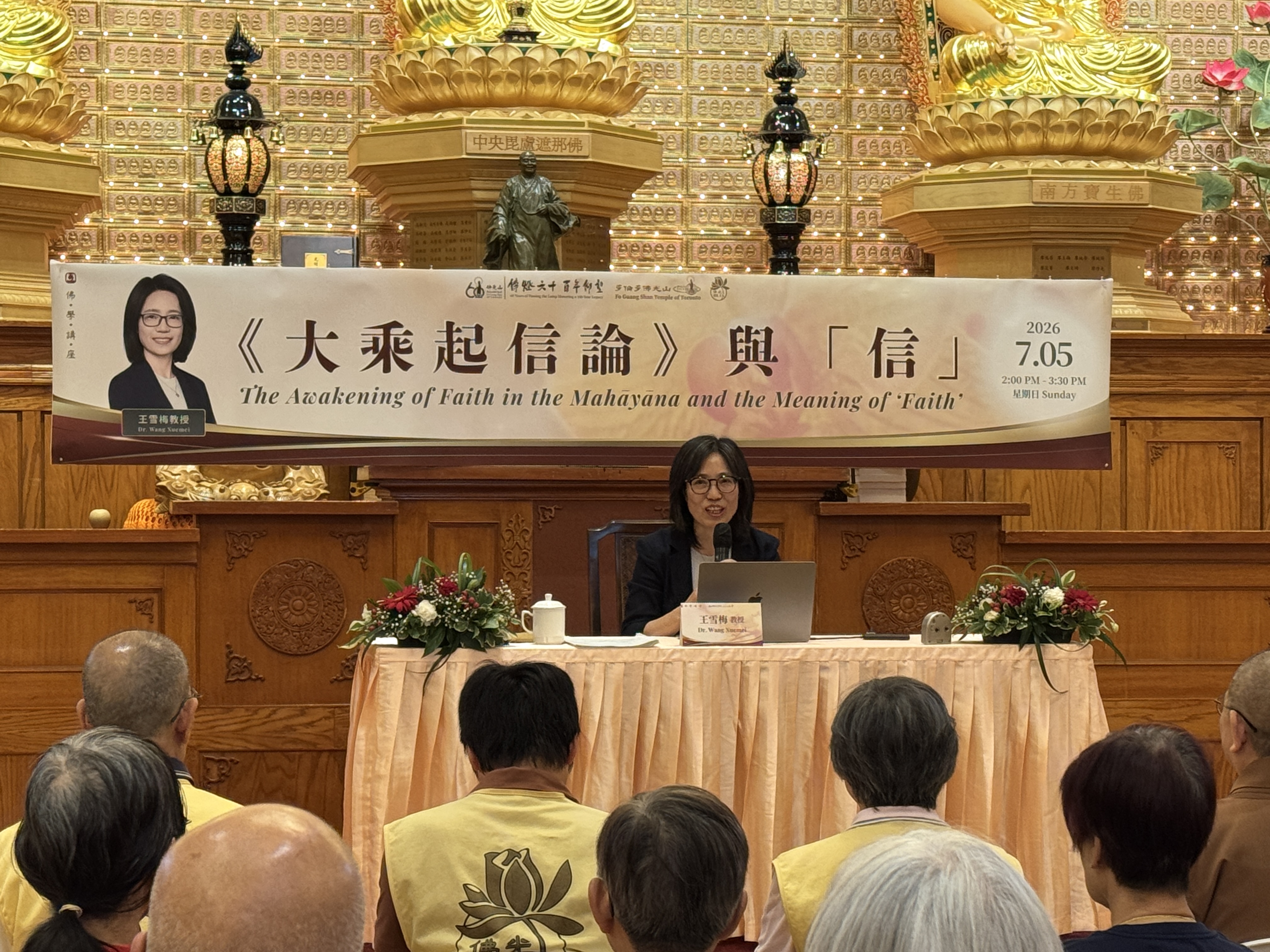
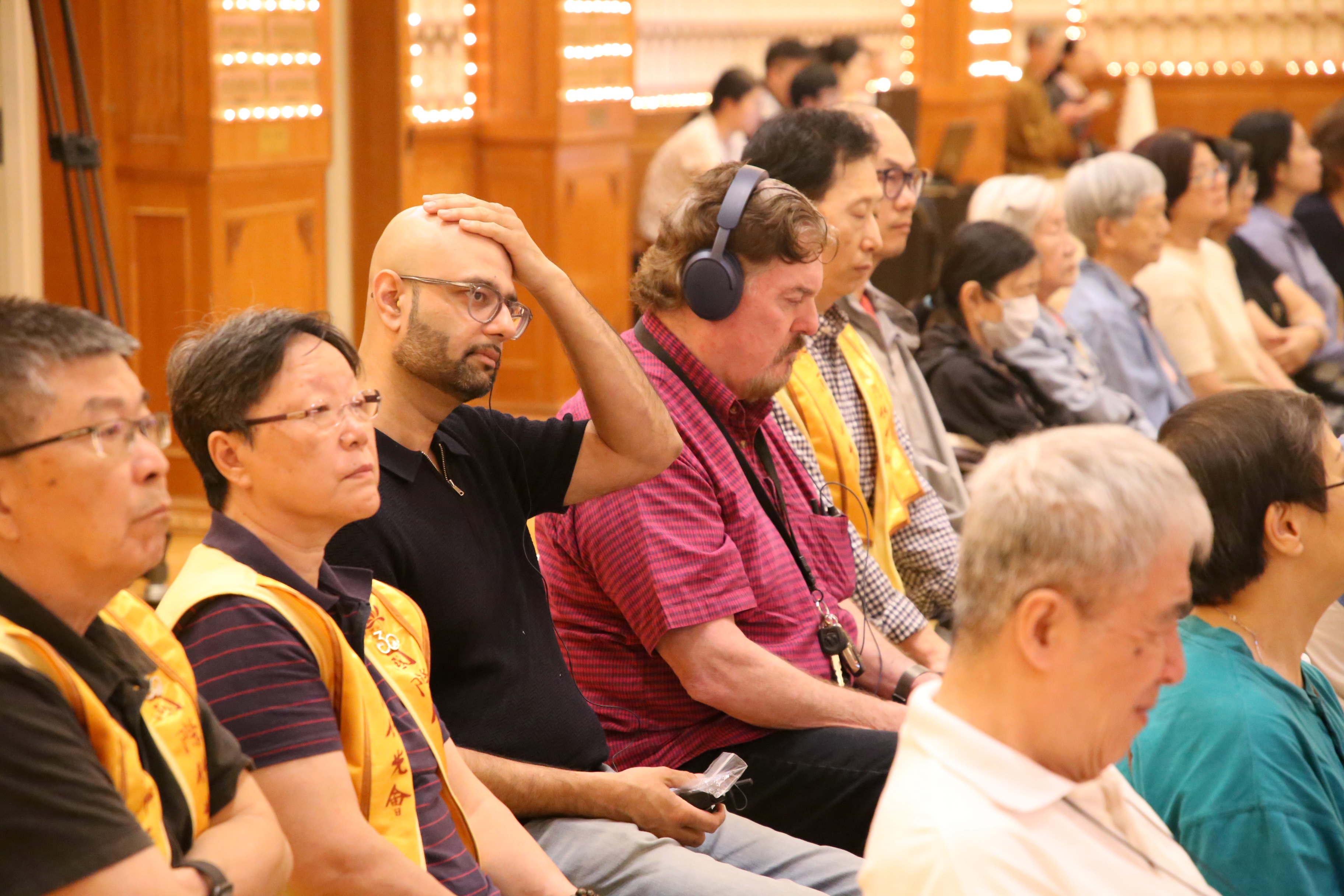
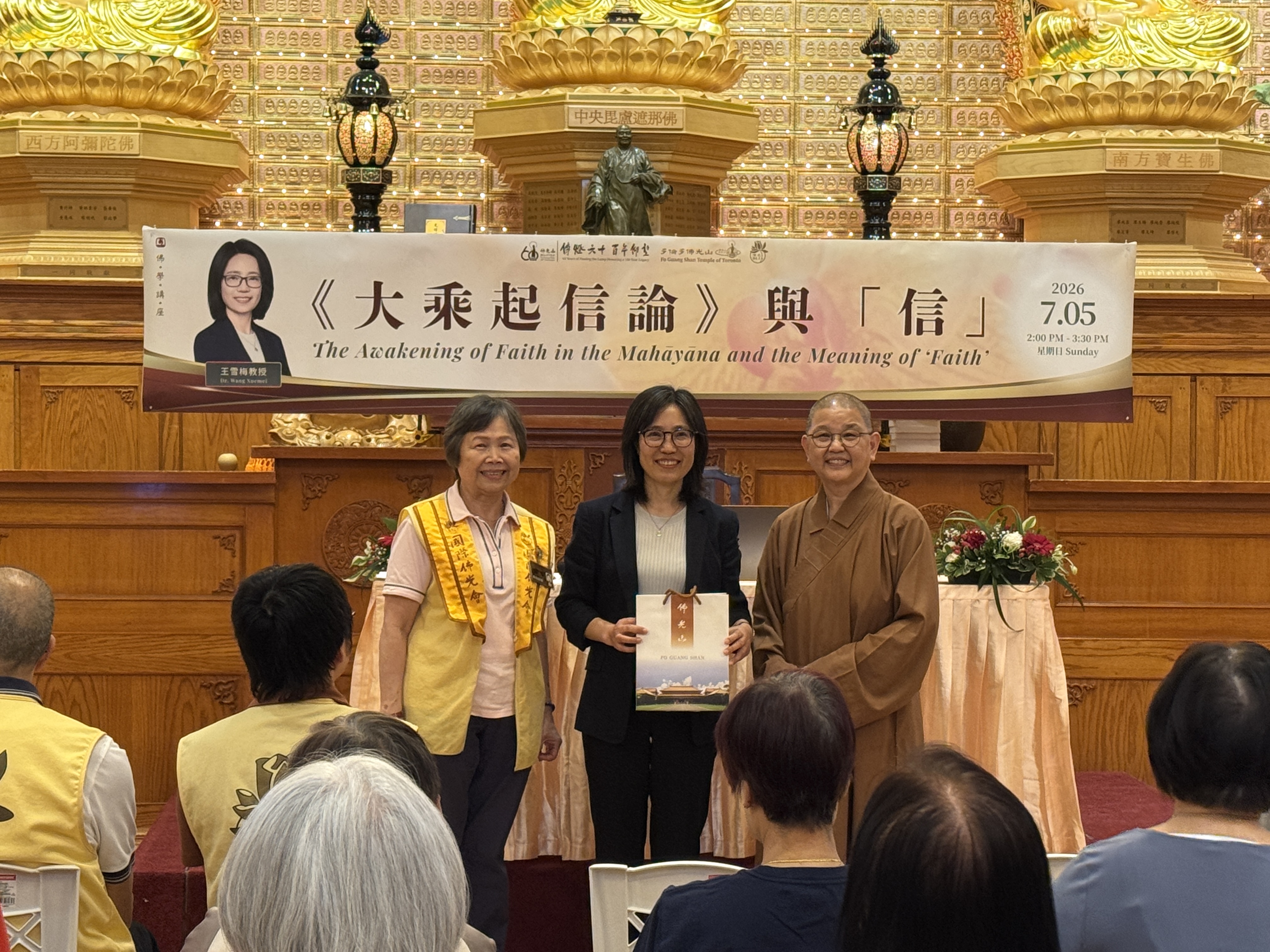
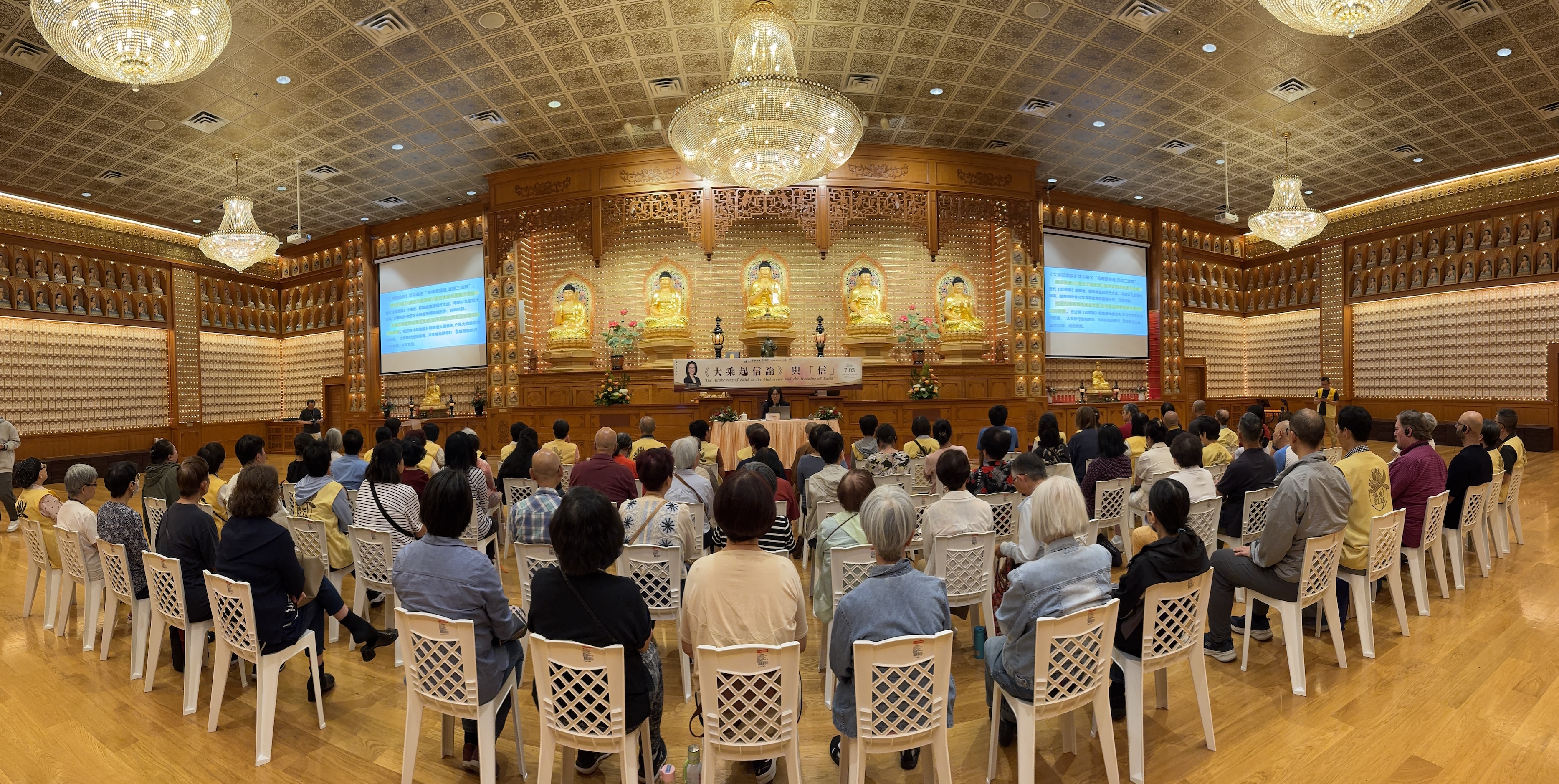
Fo Guang Shan Temple of Toronto hosted a Buddhist lecture on July 5 featuring Professor Xuemei Wang, Professor of Philosophy at Northwest University, China, and Distinguished Research Fellow of the Fo Guang Shan Institute of Humanistic Buddhism. Nearly 100 participants attended the lecture, which explored The Awakening of Faith in the Mahāyāna and its teaching of faith as the foundation of Buddhist practice.
In her opening remarks, Venerable Chueh Fan, Abbess of Fo Guang Shan Temple of Toronto, described The Awakening of Faith in the Mahāyāna as one of the most influential treatises in East Asian Buddhism. She expressed hope that the lecture would deepen participants' understanding of Buddhism, strengthen right faith, and inspire them to integrate Buddhist wisdom into everyday life.
Professor Wang emphasized that The Awakening of Faith in the Mahāyāna is not merely a philosophical text but a practical guide to spiritual cultivation. She explained that the "faith" (qi xin, "awakening faith") taught in the treatise is neither blind belief nor unquestioning acceptance of authority. Rather, it is confidence in the inherent Suchness (tathatā)and Buddha-nature possessed by every sentient being. This confidence naturally gives rise to faith in the Buddha, the Dharma, and the Sangha, forming the foundation of Buddhist practice.
Drawing on the treatise's framework of One Mind, Two Gates, Three Greatnesses, Four Faiths, and Five Practices, Professor Wang demonstrated that its ultimate purpose is to transform faith into lived experience. She outlined the progressive path of faith, understanding, practice, and realization, highlighting the cultivation of generosity, ethical discipline, patience, diligence, and especially meditation through calm abiding and insight (śamatha and vipaśyanā) as essential to Buddhist practice.
Professor Wang further explained that Venerable Master Hsing Yun regarded The Awakening of Faith in the Mahāyānaas one of the principal philosophical foundations of Humanistic Buddhism. By affirming that all beings inherently possess Buddha-nature, Humanistic Buddhism encourages people to realize their awakened potential through everyday life—doing good deeds, speaking kind words, thinking wholesome thoughts, and serving others with compassion and wisdom.
The lecture resonated strongly with participants from diverse cultural backgrounds. Attendee Ian Horn shared that he had previously understood faith as belief in an external authority. Through the lecture, however, he came to understand that Mahāyāna faith is fundamentally confidence in one's own inherent Buddha-nature. He described this as a profound and transformative shift in his understanding of Buddhist practice—not as seeking something outside oneself, but as awakening the wisdom and compassion already within.
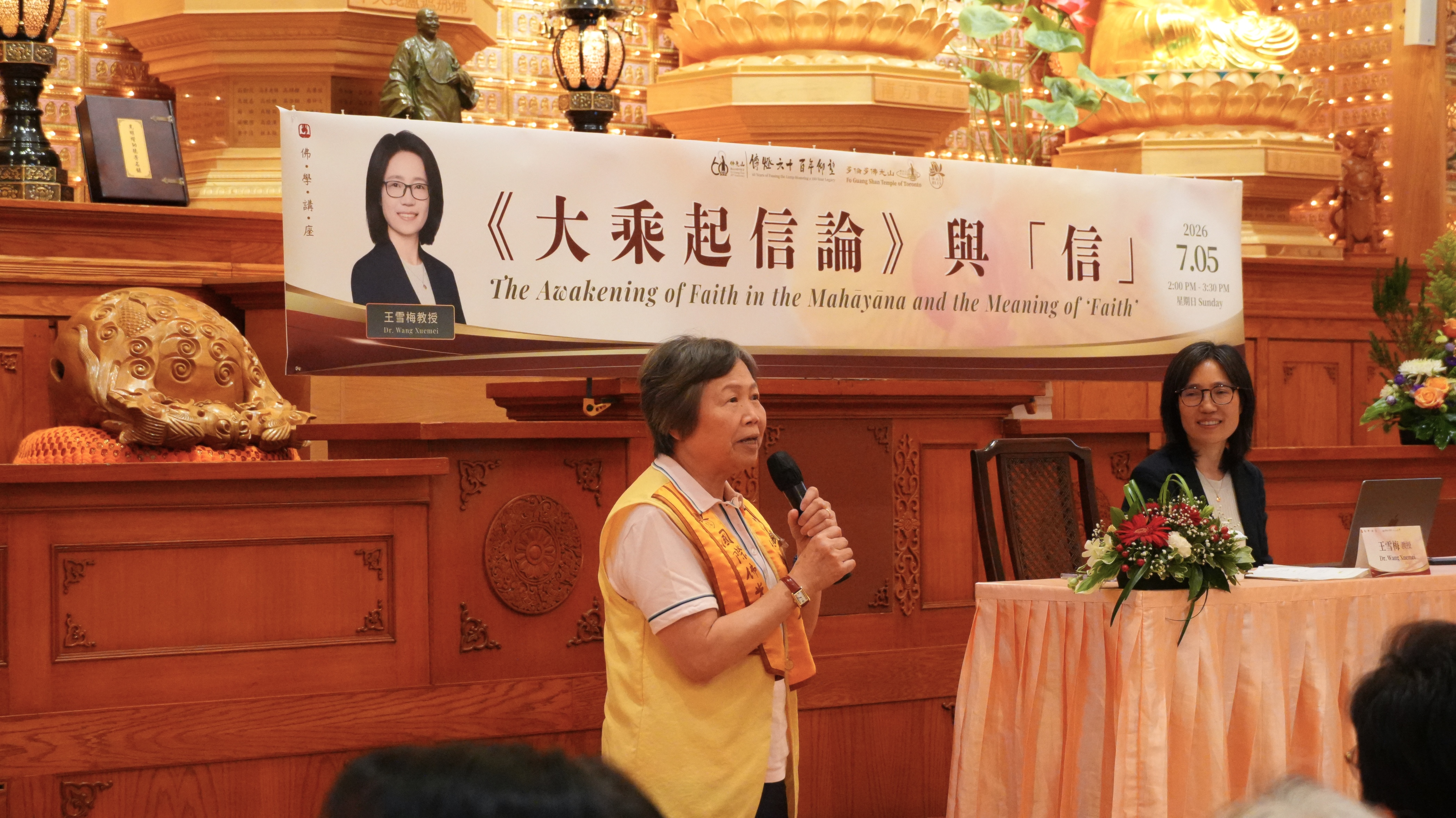
The lecture concluded with remarks by Rachel Fan, Vice President of the Buddha's Light International Association Toronto (BLIA Toronto), who thanked Professor Wang for presenting the profound teachings of The Awakening of Faith in the Mahāyāna with both scholarly depth and practical clarity. She encouraged participants to cultivate right faith and apply Buddhist principles into everyday practice.