English


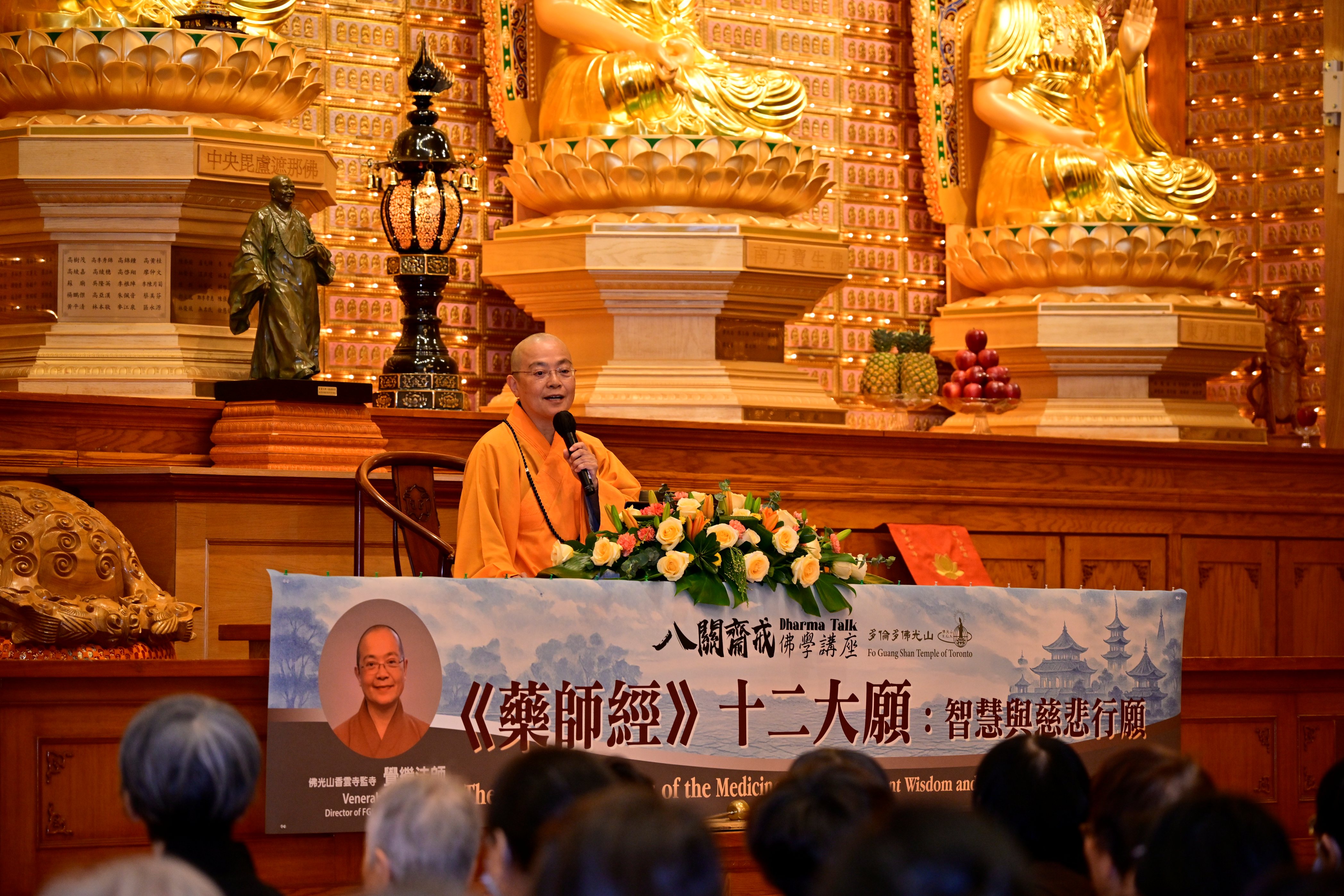
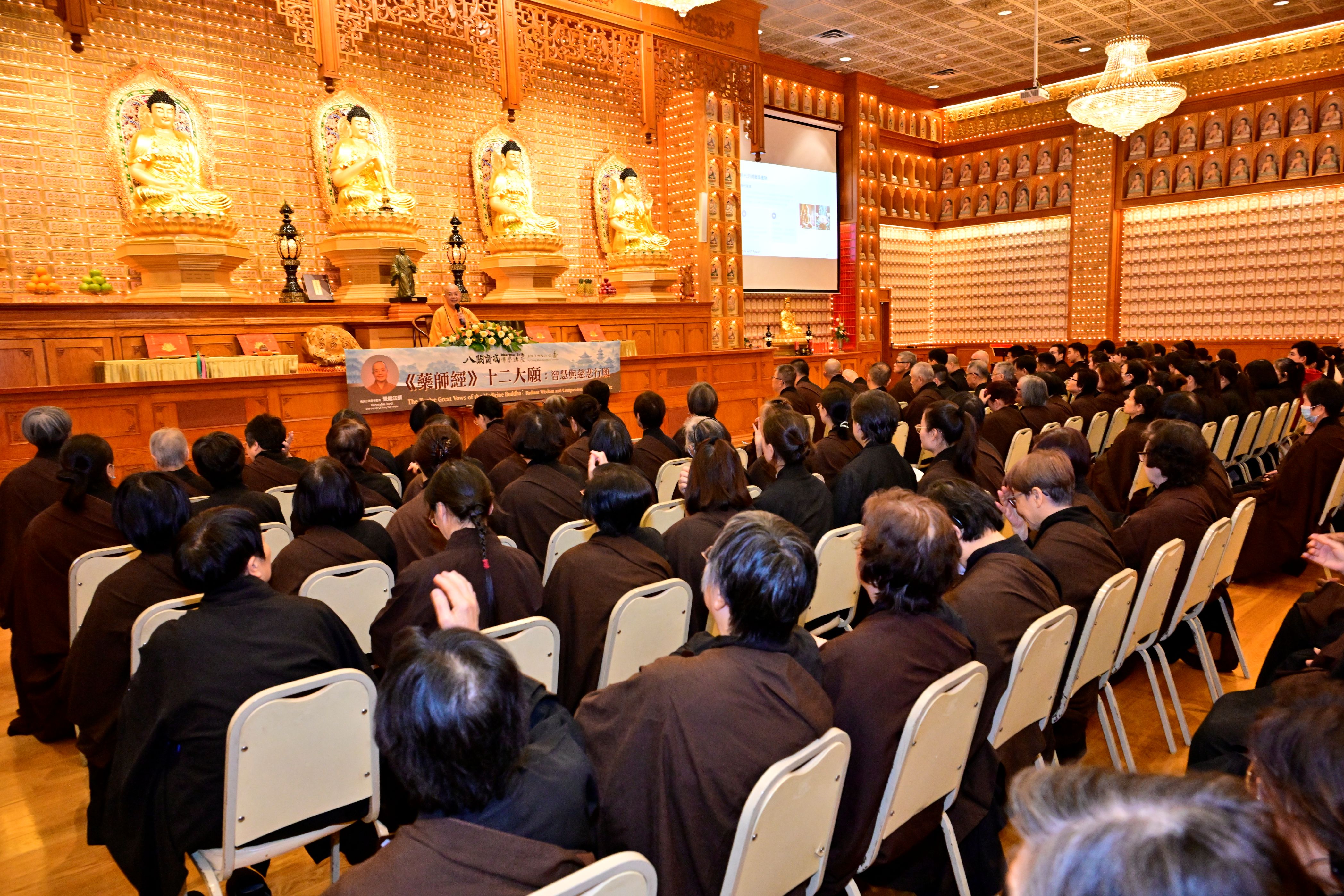
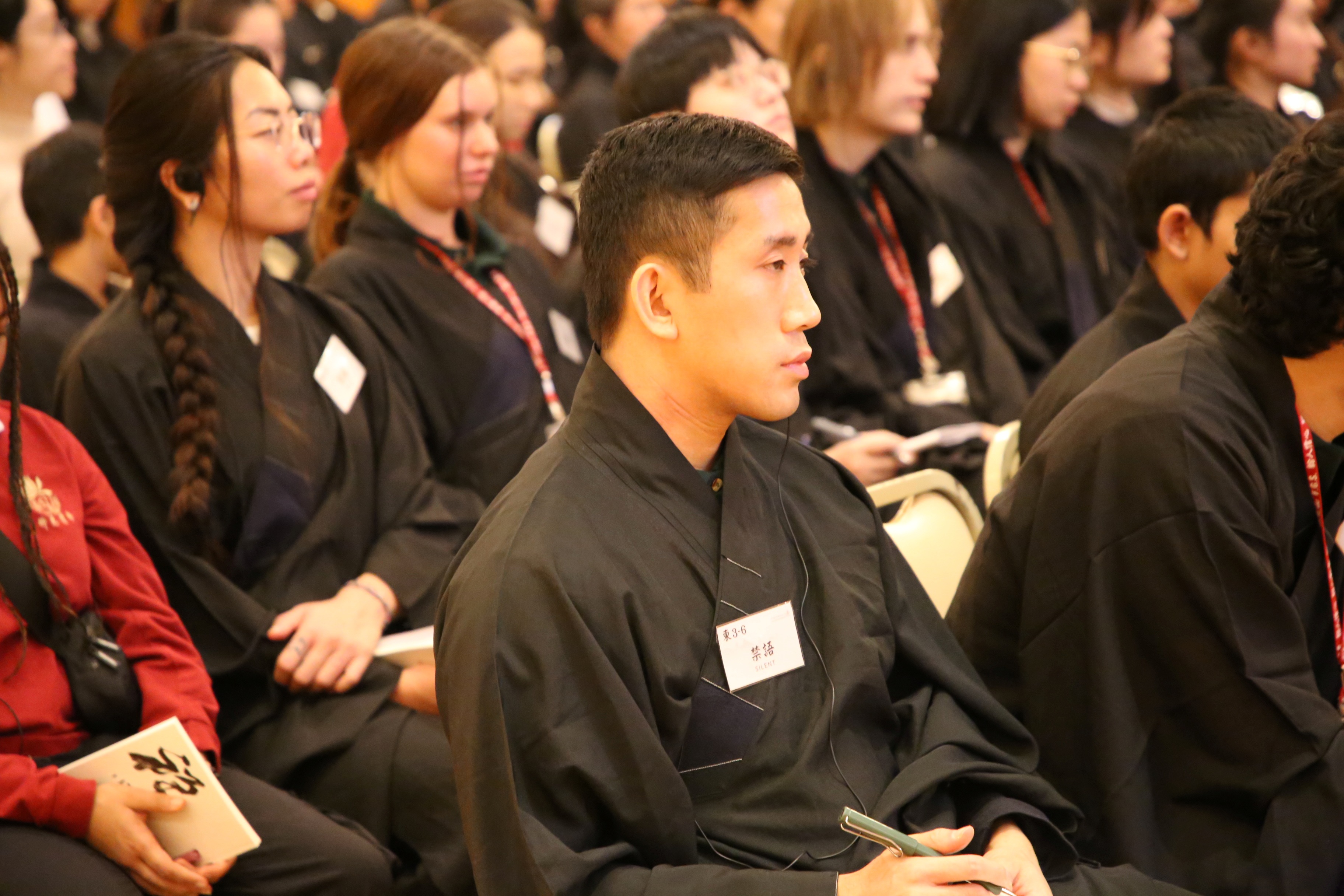
Fo Guang Shan Temple of Toronto held its the Eight Precepts Dharma Lecture on November 29, welcoming Venerable Jue Ji, Director of Fo Guang Shan Xiang Yun Temple in Austin, USA, to deliver a talk titled “The Twelve Great Vows of the Medicine Buddha — A Guide to Wisdom and Compassion in the Age of AI.” Nearly 200 participants attended the session, including 125 Eight Precepts practitioners, 18 youth from the Youth Temple Retreat, and members of BLIA Toronto.
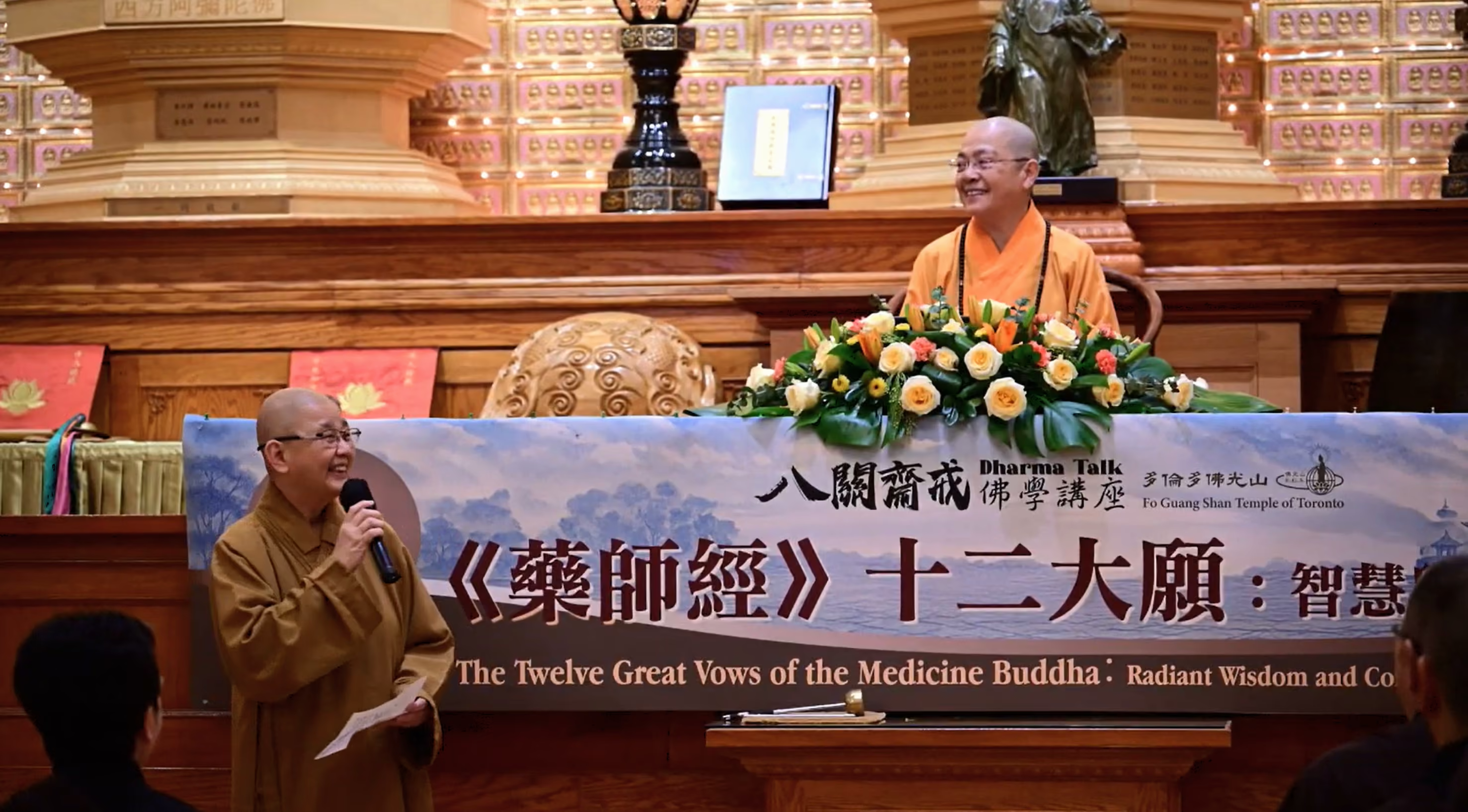
Venerable Chueh Fan, Abbess of Fo Guang Shan Temple of Toronto, introduced the speaker with gratitude and shared Venerable Jue Ji’s longstanding contributions to Humanistic Buddhism. Ordained in 1990 under Venerable Master Hsing Yun, she has devoted more than three decades to Dharma propagation and community service and holds a PhD from the Centre of Buddhist Studies at The University of Hong Kong. The Abbess expressed joy that the Toronto community could deepen its connection with the Medicine Buddha’s teachings through this lecture.
Venerable Jue Ji opened by reflecting on the rapid growth of artificial intelligence. While modern technology offers convenience, she noted that it must be guided by ethics and compassion to truly benefit society. She then introduced the Twelve Great Vows of the Medicine Buddha, explaining the compassion behind each vow and its relevance to contemporary life. She related the Twelve Great Vows to Maslow’s hierarchy of needs, showing how the Medicine Buddha’s compassion responds to the physical, emotional, and spiritual needs we all experience.
The Venerable continued by outlining each vow in sequence: the first three expand one’s clarity and wisdom; the fourth to sixth focus on guidance and healing; and the seventh to ninth address transformation and well-being. Drawing from her Dharma propagation journey in Texas, she shared how encountering people facing illness and hardship strengthened her resolve to emulate the Medicine Buddha’s boundless compassion.
Addressing concerns about the end of life, Venerable Jue Ji reminded the audience that liberation does not come from external judgment but from one’s own actions. By upholding the Eight Precepts, honoring the Sangha, reciting the Medicine Buddha Sutra, and making light offerings, practitioners create wholesome causes that ease suffering and illuminate the path ahead. “The true judge of karma is oneself,” she emphasized. “Good deeds bring joy; harmful deeds bring pain.”
The lecture concluded with reflections on Venerable Master Hsing Yun’s life of resilience and dedication. Venerable JueJi encouraged everyone to follow the Medicine Buddha’s light—cultivating compassion, wisdom, and the courage to support others on the path.