Building Bridges Through Spiritual Care: Correctional Chaplains Visit Fo Guang Shan Temple of Toronto
November 24, 2026
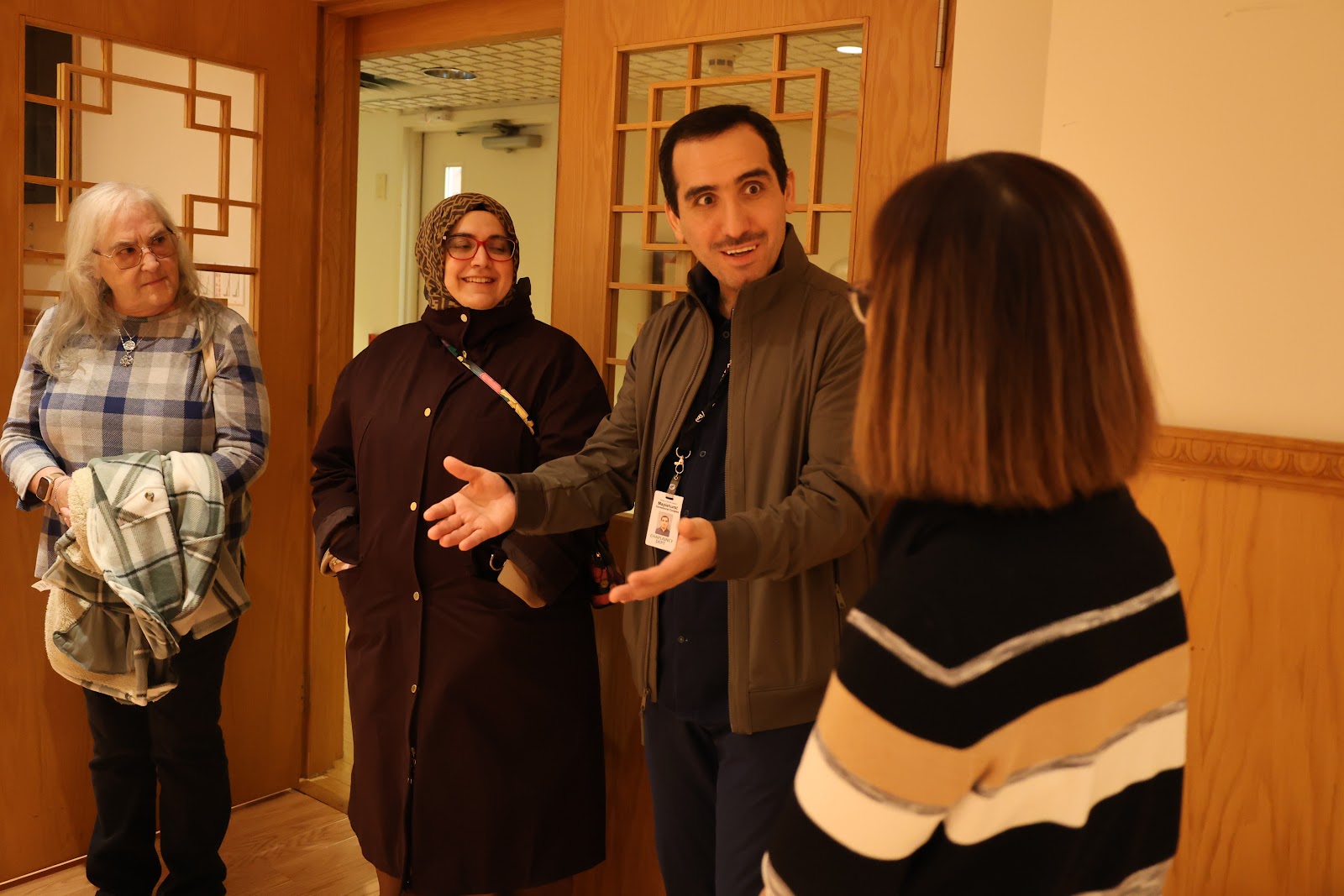
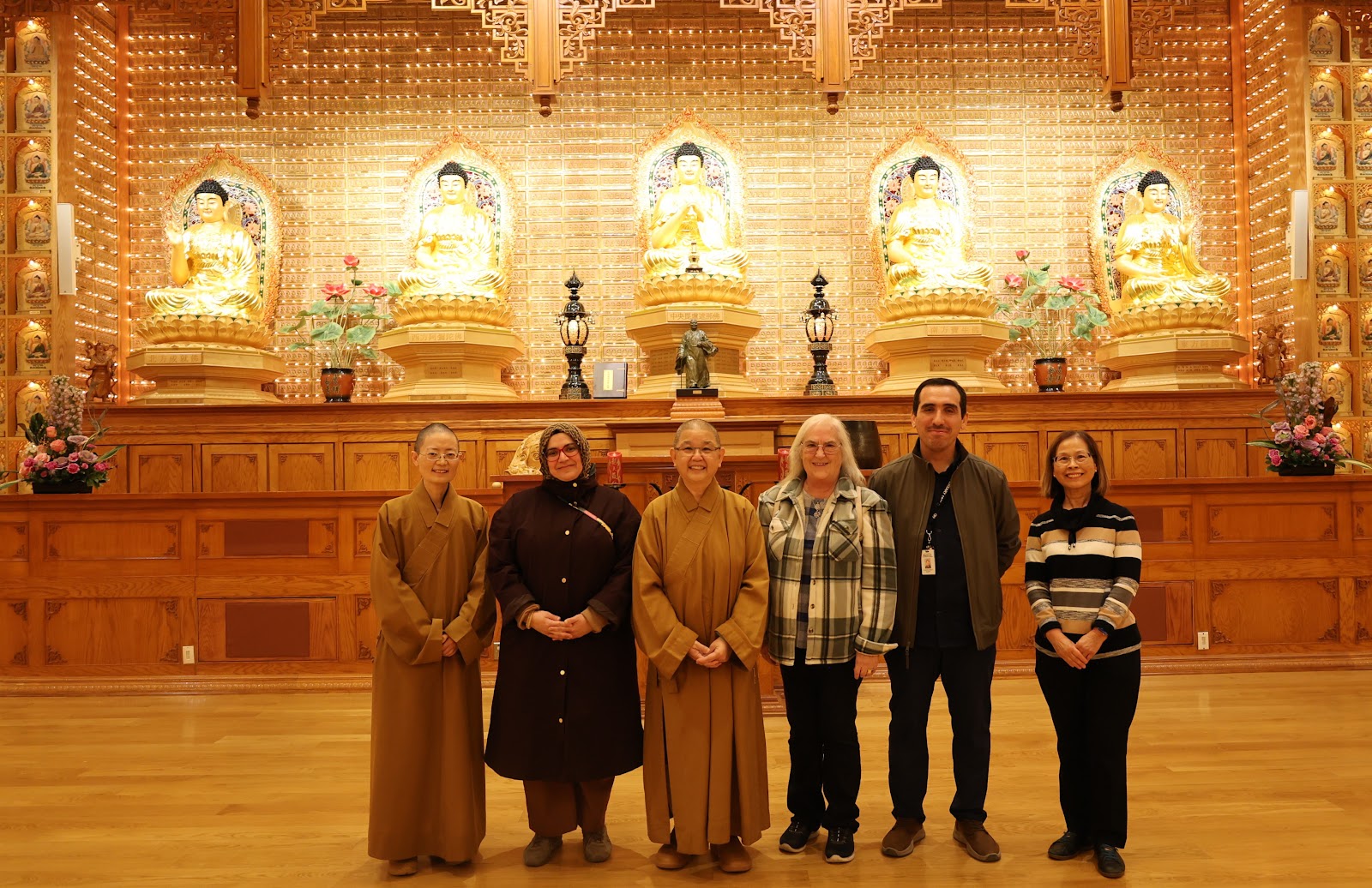
On November 24, three correctional chaplains visited Fo Guang Shan Temple of Toronto to explore Buddhist approaches to spiritual care, meditation, and interfaith collaboration in correctional settings. Muhammed Aksu, Esra Aksu, and Janice Cardie were welcomed by Venerable Chueh Fan, Abbess of Fo Guang Shan Temple of Toronto; Superintendent Venerable Zhi Guan; and Stephanie Hong, leader of the Toronto Buddha’s Light Spiritual Care Group.
The visit began in the Main Shrine, where Venerable Chueh Fan guided the guests in flower offerings, explaining the symbolism of Buddhist offerings and emphasizing sincerity as the highest form of offering. The Abbess also introduced the temple’s history, volunteer-driven initiatives, and commitment to Humanistic Buddhism, community education, and service.
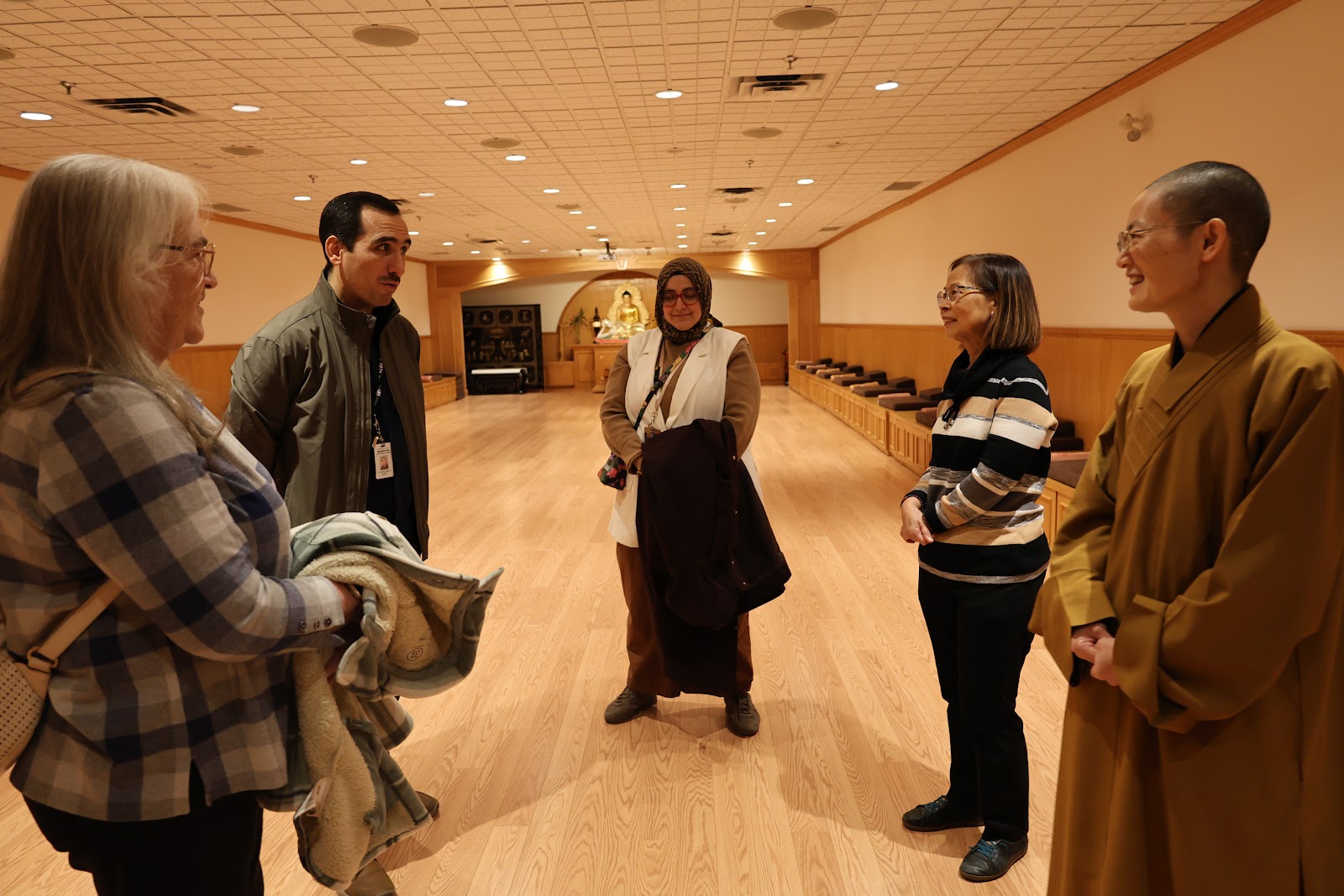
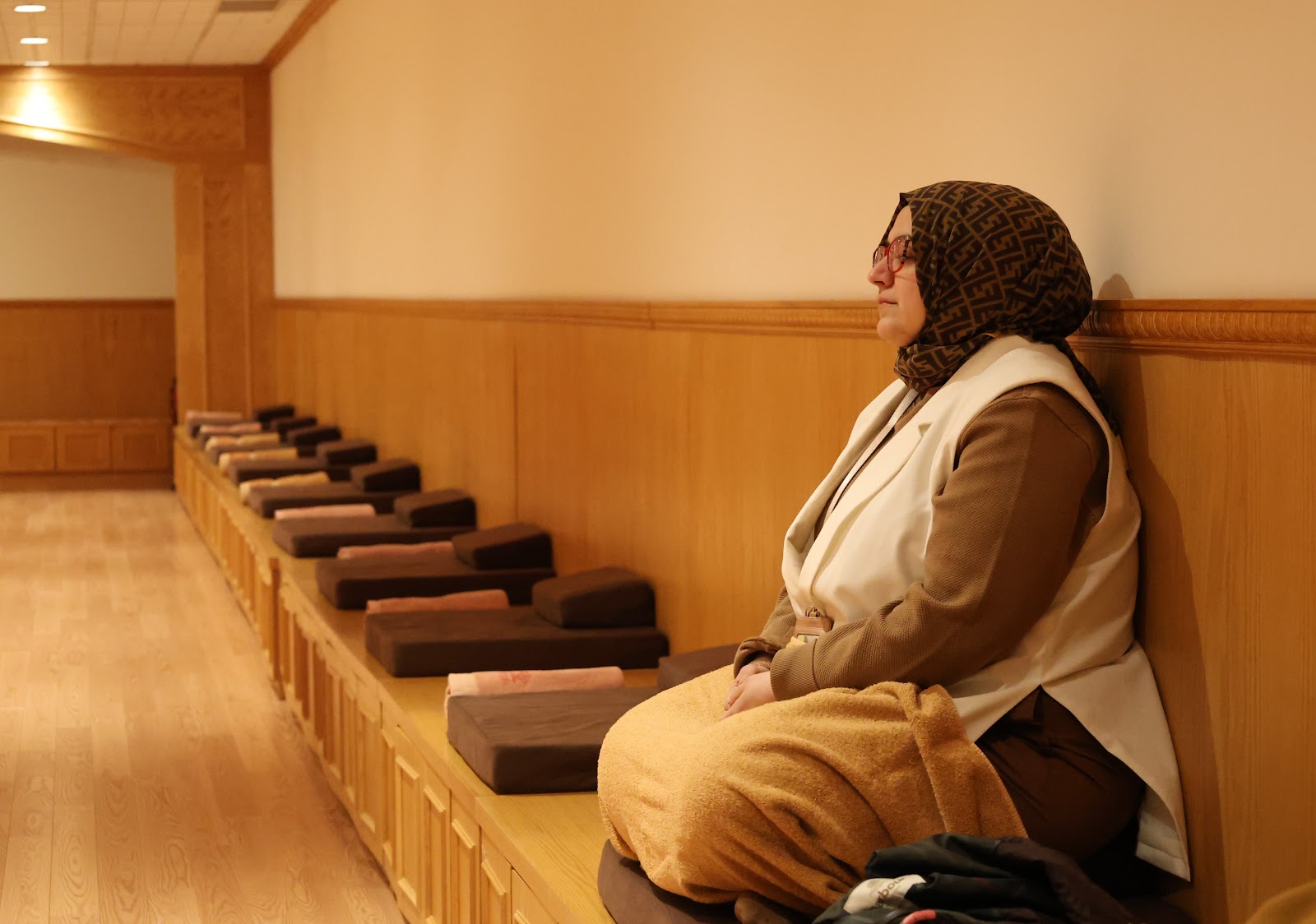
In the Meditation Hall, Venerable Zhi Guan introduced Chan Buddhism, explaining how sitting and walking meditation, breath awareness, mindful service, and tea meditation can cultivate concentration and self-awareness.
Muhammed Aksu, who serves at Grand Valley Institution for Women and Maplehurst Correctional Complex, recognized common ground between Islamic spiritual reflection and Buddhist meditation. Discussions explored the possibility of introducing tea meditation into correctional settings, including adapting tea utensils to meet institutional safety requirements. Esra Aksu also experienced guided sitting meditation and breath awareness.
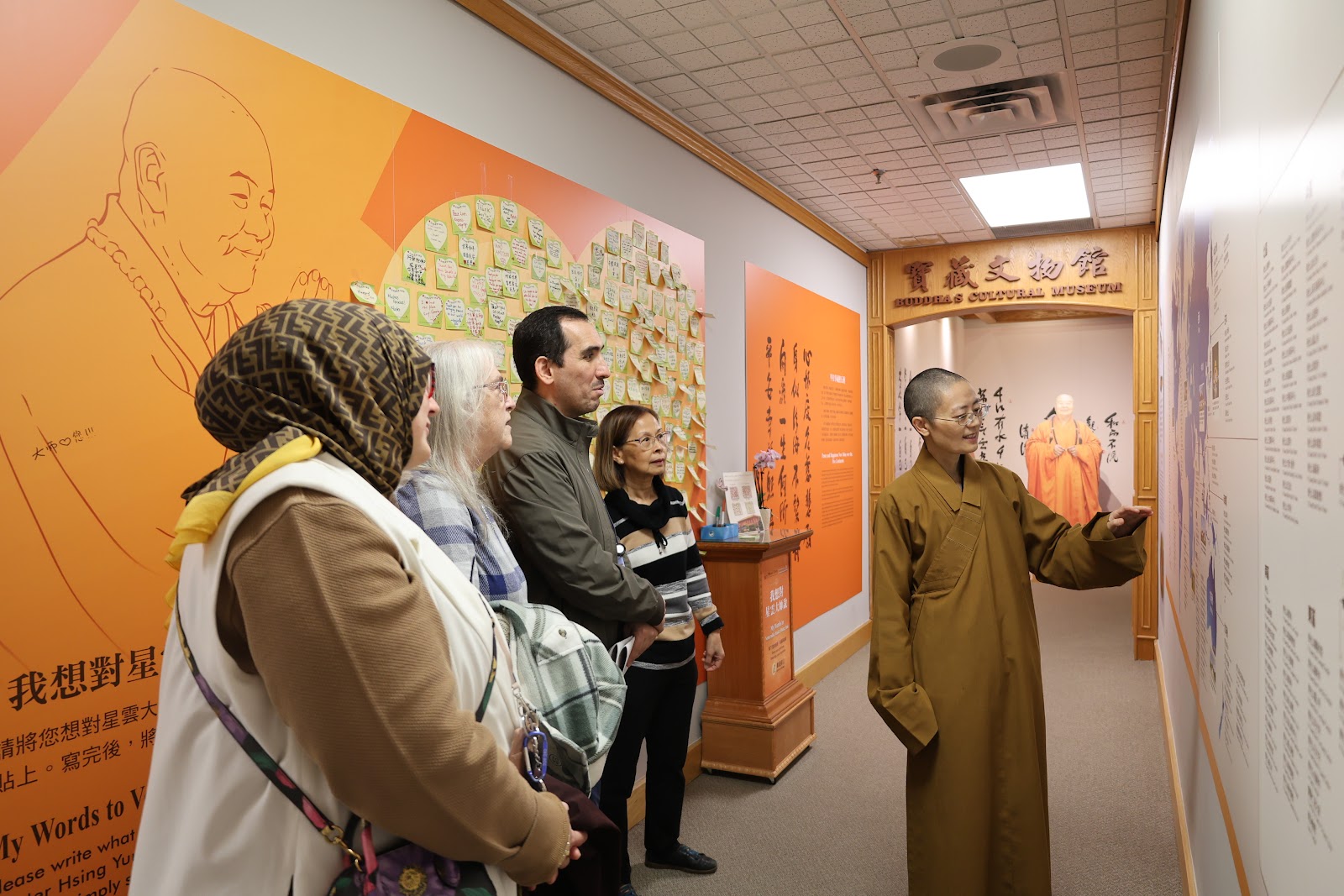
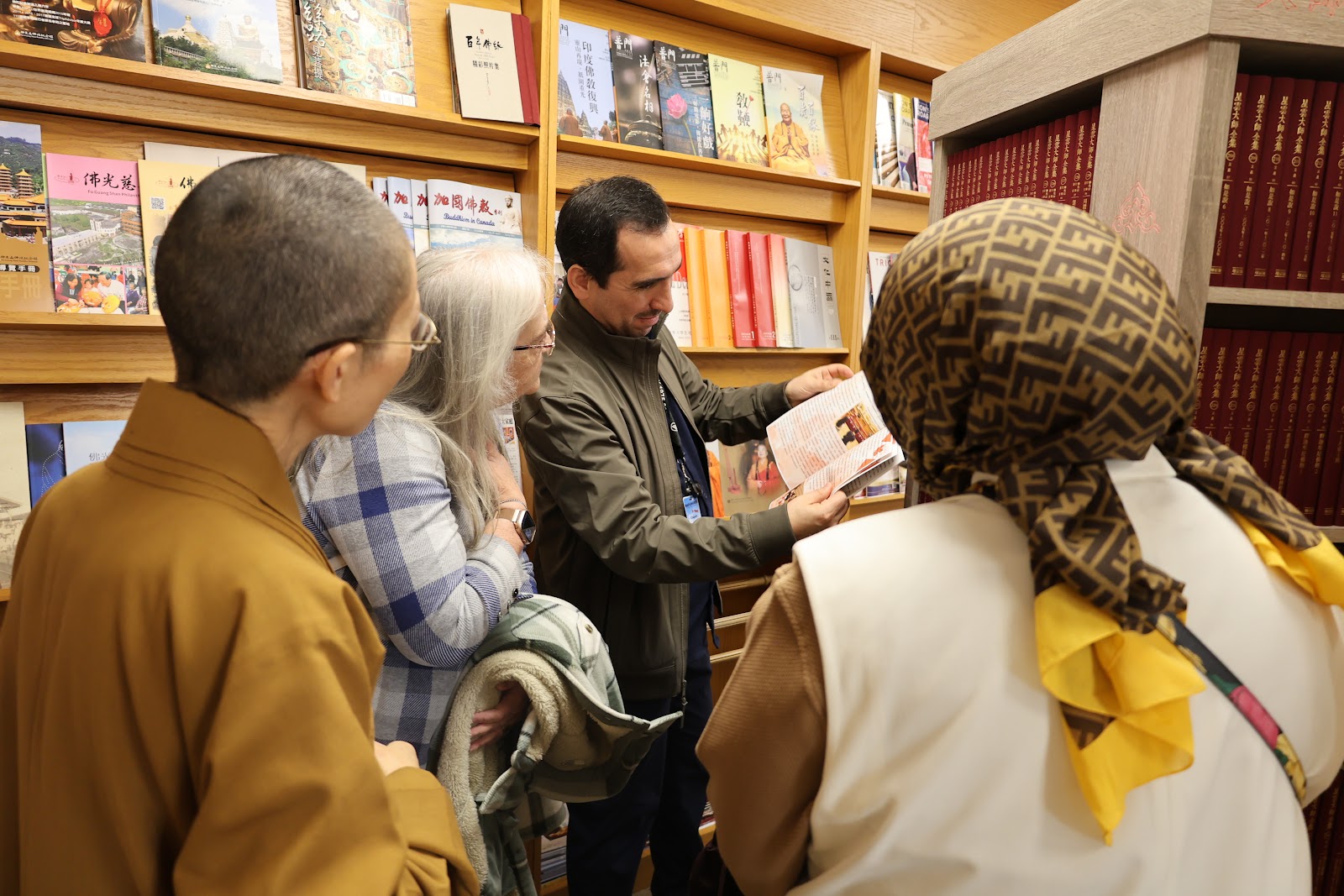
During their library visit, the chaplains expressed appreciation for Insight, the temple’s English-language magazine featuring community activities and teachings by Venerable Master Hsing Yun. They expressed interest in making the publication available to incarcerated individuals as a resource for spiritual reflection and personal growth.
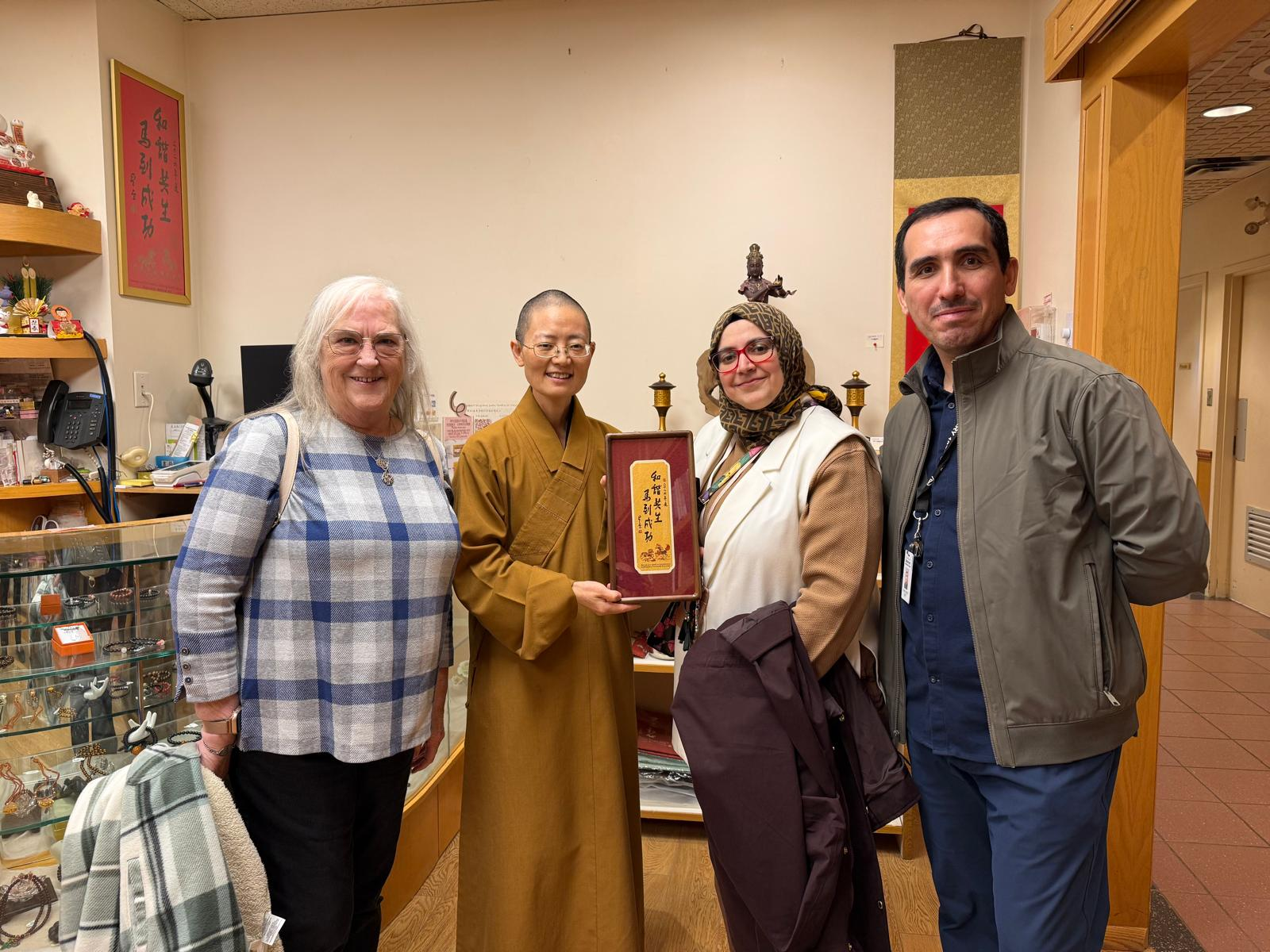
The chaplains also requested a framed copy of Venerable Master Hsing Yun’s calligraphy, “Harmony and Coexistence,” for their office, recognizing its relevance to interfaith understanding.
The visit concluded with a vegetarian lunch at the Water Drop Teahouse and the presentation of Buddhist publications and blessing keepsakes.
Both sides expressed a shared commitment to strengthening interfaith partnerships and exploring practical approaches to spiritual care that foster inner stability, resilience, and hope among incarcerated individuals.
More Photos